Web With 13 Parts Mind Mapping Made Easy
Mind mapping is best known as a brainstorming exercise. You start with a central topic—surrounded by a bubble—then expand your ideas by adding additional bubbles that are each connected together with lines to create relationships.

But mind mapping is useful for much more than just brainstorming. You can use mind maps to learn or teach new information faster, plan a meeting, create an outline for an essay or blog post, convey complex information more clearly, and much more.
To help you come up with new ideas for how to use mind maps, we've pulled together 13 creative mind map examples you can use for inspiration.
But First, Here's How to Create a Mind Map
There are lots of ways to create mind maps. The most basic approach is to just use pen and paper. Start with a central bubble, and then expand outward from there, adding as many ideas as you can in subsequent bubbles and connecting related ideas together with lines.
And while the pen and paper method works for basic mind mapping, it's not an ideal tool. You may run out of room on the paper. You can't easily reorganize or rearrange bubbles. And the end result isn't likely going to be clean enough to share it with others.
For these reasons, a simpler way to create a mind map is to use a mind mapping tool like MindMeister.
MindMeister makes it easy to build professional mind maps that can be as large as you need them to be, are easy to reorganize, and support features that pen and paper simply can't, such as hyperlinking your bubbles, adding images, and collaborating on your mind map with others.

Build beautiful mind maps quickly and easily
Try MindMeister
Learn more

13 Mind Map Examples to Use for Inspiration
There are an endless number of ways to use mind maps in all aspects of your life. To help you get inspired to create your next mind map, we put together this list of 13 mind map examples.
1. Brainstorming

Suffering from writer's block? Not sure what to name your new app? At a loss for ideas for your next essay assignment? Creating a mind map is a great way to brainstorm, get your mind working, and generate ideas via associations.
Find a quiet space where you can feel creative, start with a central bubble, and then create additional bubbles as ideas flow into your mind. By the time you're finished, you'll either have an idea you're excited about or lots of new ideas to share and consider.
2. Writing an essay
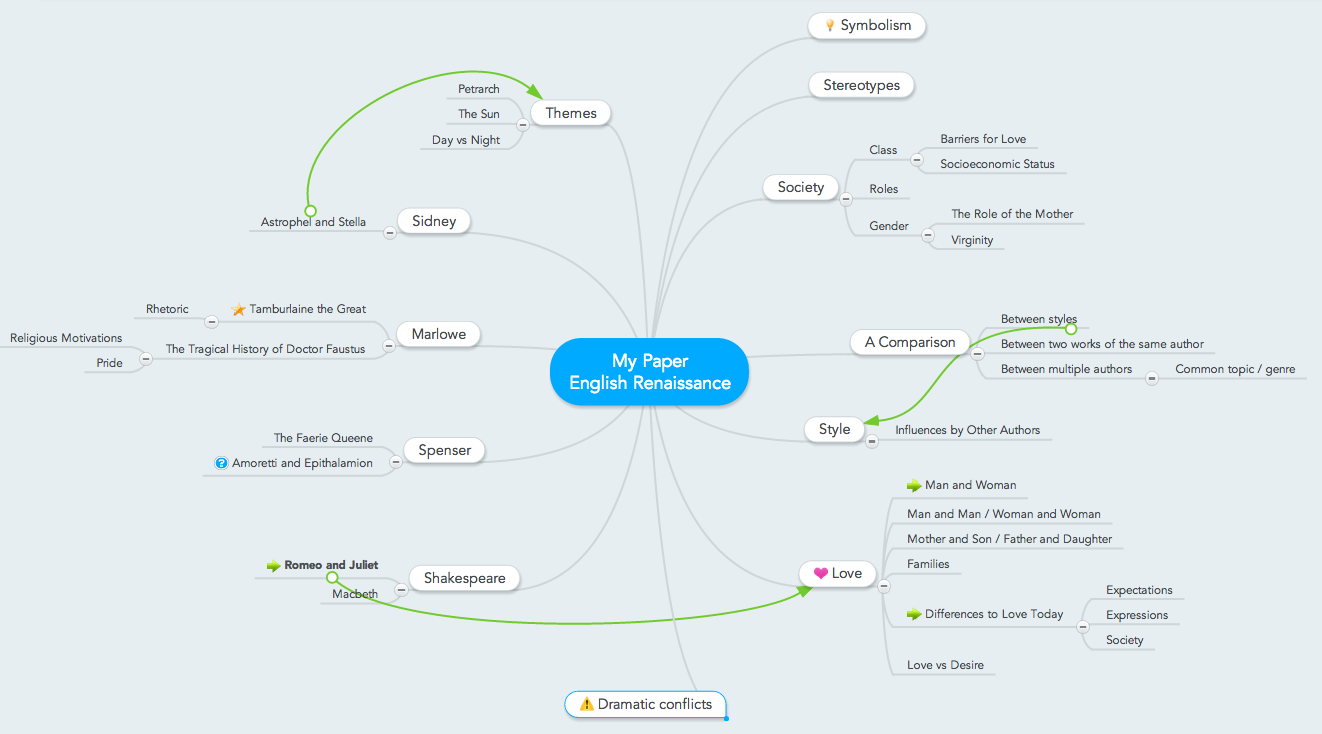
You can use a brainstorming mind map to come up with ideas for an essay you need to write, and then you can take it a step further and use a mind map to figure out what you should write about in your essay.
Just start with your main topic in the center and then branch out with ideas for topics you'll cover in your essay. And if you're using an online mind mapping tool like MindMeister, you can even link your bubbles to the sources you plan to cite in your essay.
3. Taking notes
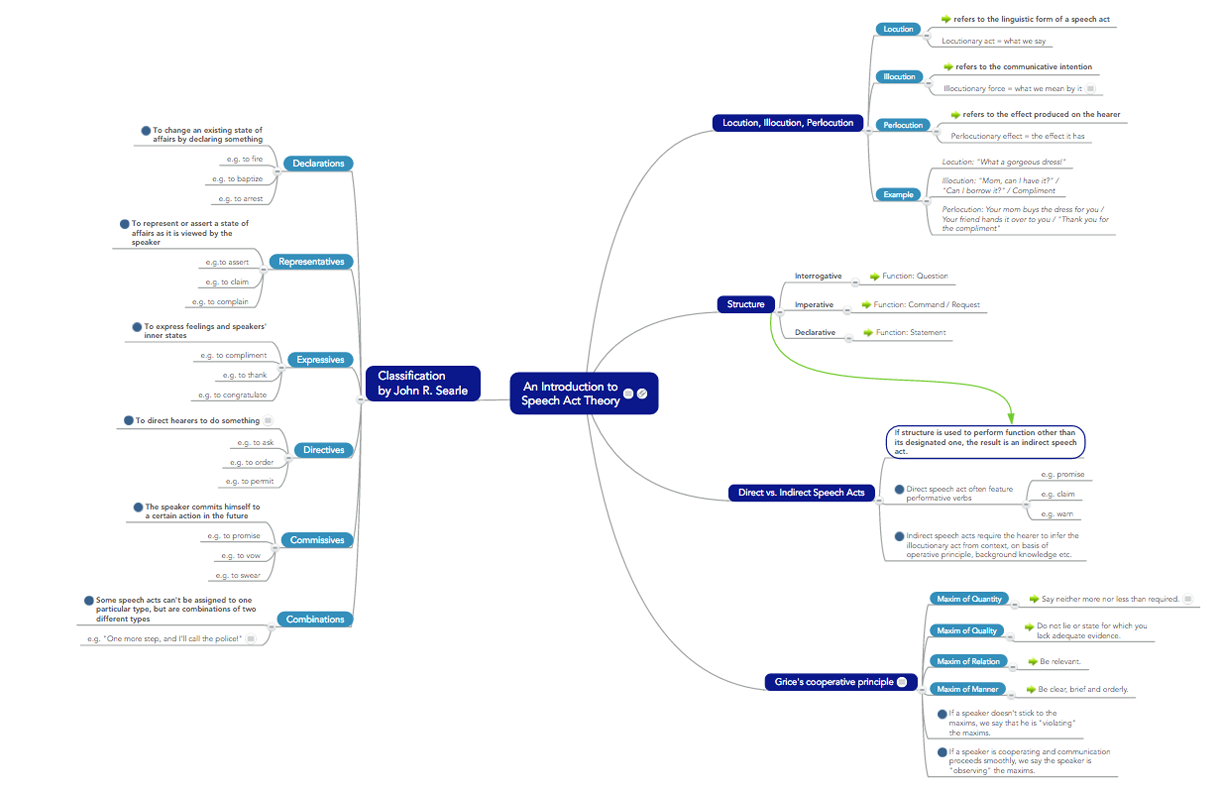
While taking a class, attending a workshop, or listening to a talk or lecture, you could jot notes down in a notebook, but you'll recall what you learned better if you take notes in a mind map, instead.
Say a topic comes up frequently during the lecture. With linear notes, there's no way to connect new things you learned back to the original notes you took on that topic. That's not an issue with mind maps because all of your notes stem from related topics.
4. Learning a new language
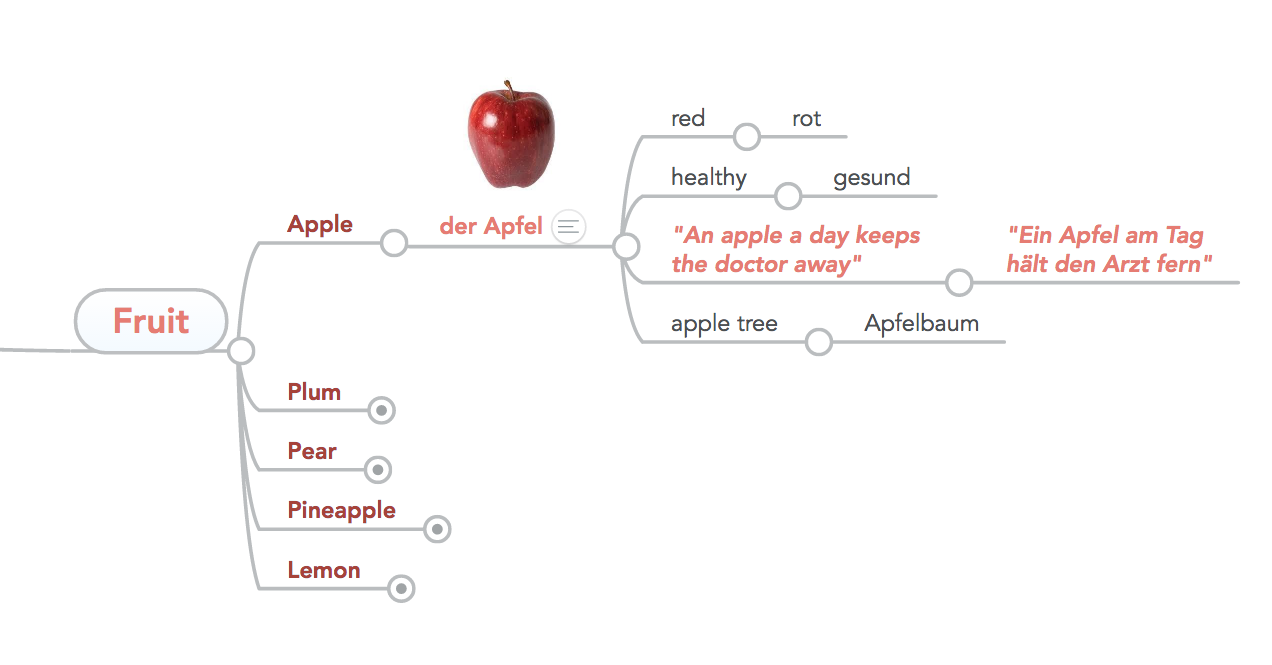
Because mind maps are visual, they help you recall information better. For this reason, they're a great tool when you're trying to learn a new language—whether you're taking a language class, preparing for an international vacation, or just expanding your knowledge for fun.
When you're at a loss for the right word in a new language, it's easier to picture the mind map you created while learning to come up with the word you're looking for.
5. Planning an event

Events—anything from a wedding to a major industry conference—can be notoriously difficult to plan. There are a lot of details to keep track of.
Using a mind map to plan your event is a great way to collect options for your event, evaluate those options when making decisions, keep track of everything that needs to be done, and share your plans with others.
6. Organizing information

A great way to use mind mapping as a business professional is for organizing information. If you're trying to create a knowledge base for your business, a great way to get started is to create a knowledge map.
Or maybe you're a lawyer or paralegal who's planning a case. The mind map example above shows how several lawyers use MindMeister to plan their cases, including the evidence they'll share and the questions they'll ask people who testify.
7. Teaching mind mapping
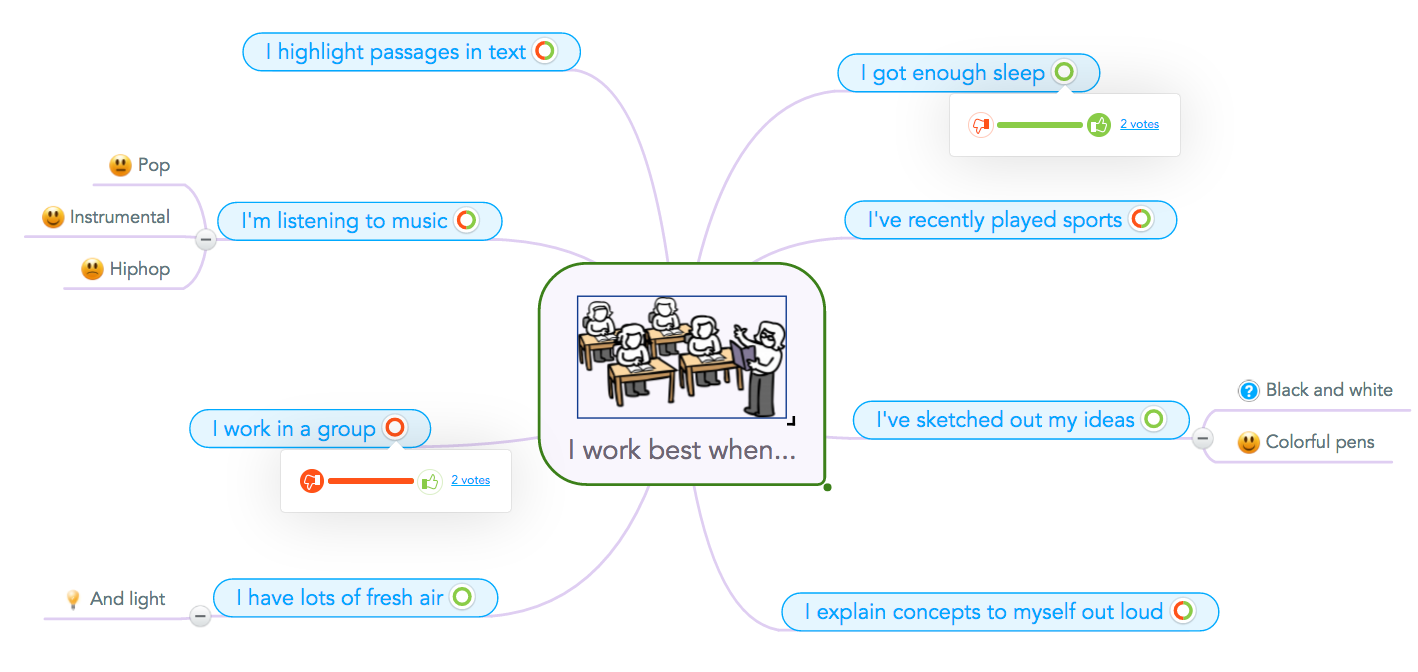
Students can use mind mapping while in school to learn, study, brainstorm, organize, take better notes, and much more. Then, they can use them throughout the rest of their lives at both home and work to do things like plan projects, organize their finances, and host productive meetings.
For this reason, mind mapping is a great technique to teach to your students, and you can even use a mind map to teach about mind maps. You can also use mind maps to plan your lessons or to encourage group work and group brainstorming.
8. Studying for an exam

Creating a mind map is a great way to study for an upcoming exam. It forces you to review the information you've learned and look at that information critically to form connections. Plus, the visual nature of a mind map makes information easier to recall when you're actually taking the exam, which could improve your grades.
9. Planning a business strategy

When it's time to plan your business strategy for next year—or to plan your strategy for the first time—creating a mind map is a great first step. It helps you brainstorm ideas and keep track of your research, and it's a great visual to reference after you start implementing your strategy.
And if you're using a tool like MindMeister, you can easily share your strategy mind map with other members of your team to collect additional ideas, receive feedback via comments, and ultimately turn your mind map entries into tasks using MindMeister's MeisterTask integration.
10. Designing user experiences

Another great way to use a mind map is as a substitute for a flow chart when designing user experiences. The mind map above shows an example of how customers might flow through a mobile app, but it's just one of many ways to brainstorm and outline customer experiences through mind mapping.
Other ways to use UX mind maps include outlining the navigation of a website and structuring all of its pages, determining where blog posts and landing pages fall within the buyer's journey, figuring out how to connect blog posts together via hubs and internal links, and much more.
11. Planning your finances
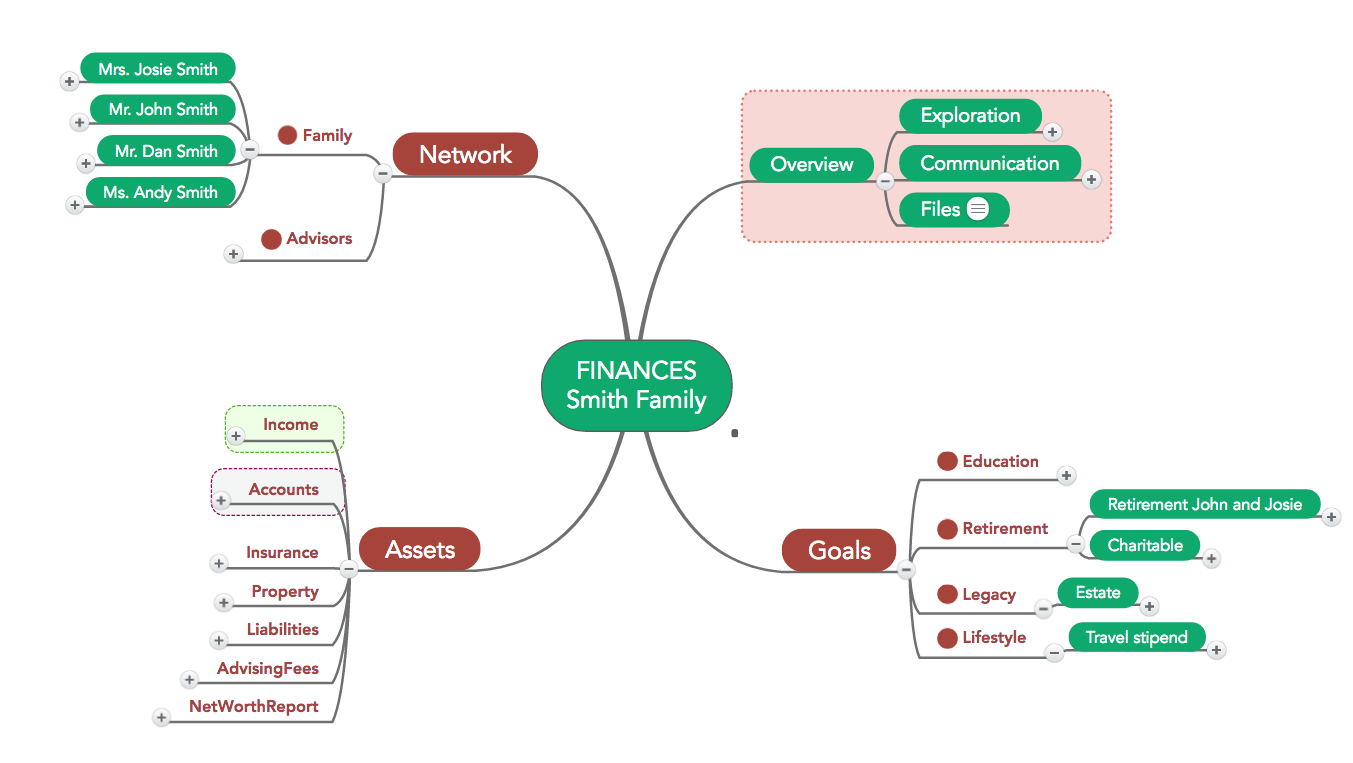
Need to create a budget or plan for sending your kids to college, for an upcoming vacation, or for retirement? A mind map is a great way to outline all of the expenses you need to account for.
Mind maps are such a good tool for financial planning that there are even financial planning firms that use MindMeister to present the financial plans they've developed to their clients, replacing spreadsheets and piles of paper with a one-page, accessible and visual roadmap.
Mind maps are a great way to make large amounts of information more accessible to clients. Want to learn more? Check out our guide to using mind maps for client presentations.
12. Preparing a meeting agenda
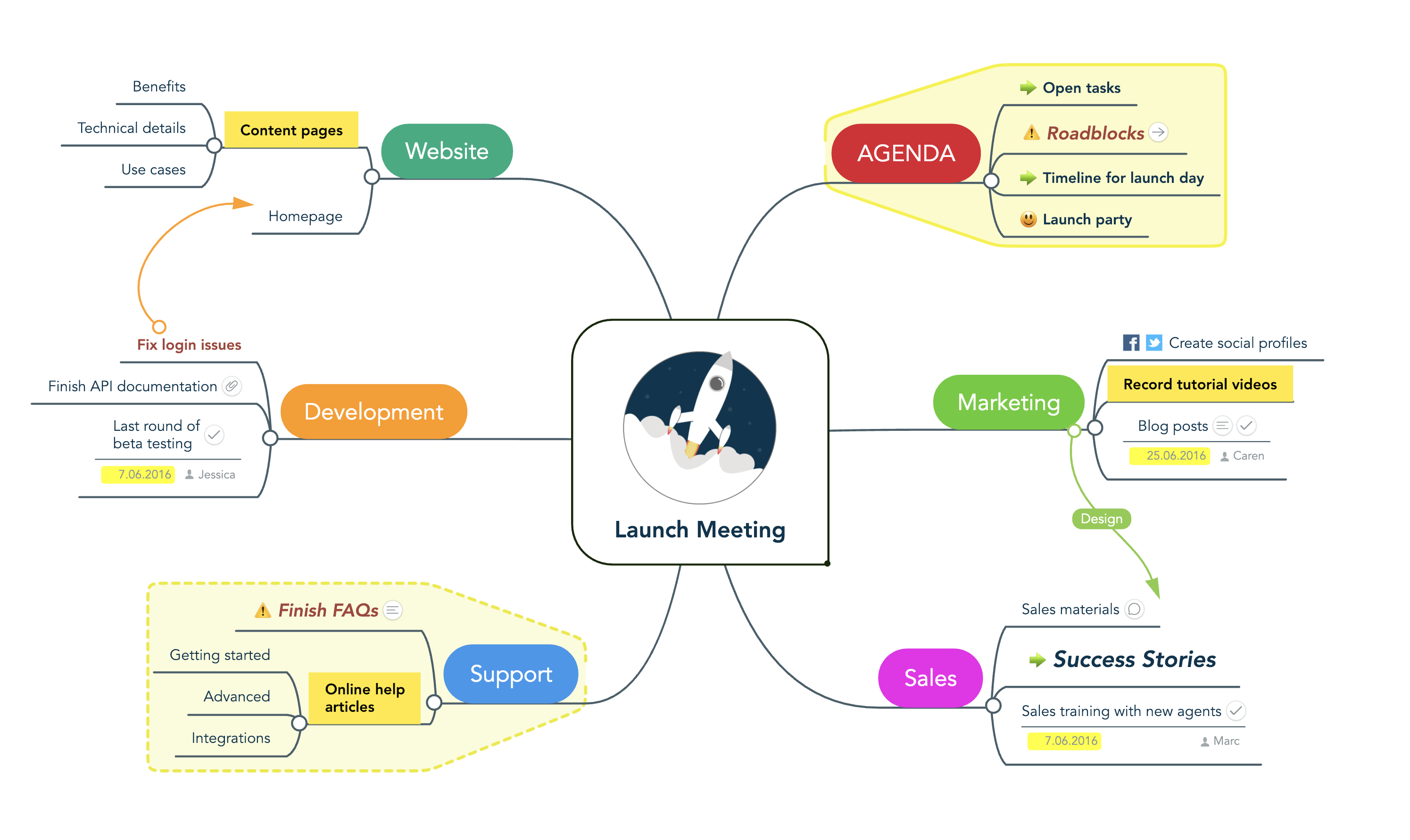
One of the best ways to conduct effective meetings is to distribute a meeting agenda to all participants ahead of time. This lets people prepare for the meeting, write down any questions they might like to ask, or submit ideas for additional topics they might want to discuss.
And if you use MindMeister to create your meeting agenda, you can take notes during your meeting and easily convert action items to assignable tasks in MeisterTask.
13. Onboarding new employees

You don't want to be the company that shows employees to their desks and then leaves them to fend for themselves and figure out what they need to know on their own, so consider creating a mind map for employee onboarding.
You can hand your finished mind map off to your HR representatives and recruiters to use as a sort-of checklist they can reference to make sure they do everything that needs to be done to ensure a smooth onboarding process for every one of your new hires.
Discover Even More Mind Map Examples
Want to see even more creative and inspiring ways to use mind maps? Check out our Public Maps Universe: a library that contains more than 300,000 example mind maps created by MindMeister users.
The best part: if you like any of the examples, you can copy them to your MindMeister account in just two clicks to start editing your mind map instantly.
Source: https://www.mindmeister.com/blog/mind-map-examples/

Post a Comment for "Web With 13 Parts Mind Mapping Made Easy"